Tomorrow's Treasury: The Five Revolutions That Will Reshape Everything We Thought We Knew
Corporate treasury stands at a genuine inflection point. Five technological revolutions, AI, tokenisation, real-time infrastructure, autonomous operations and quantum-safe cryptography, are converging to reshape what treasurers do, how they do it, and the value they create.
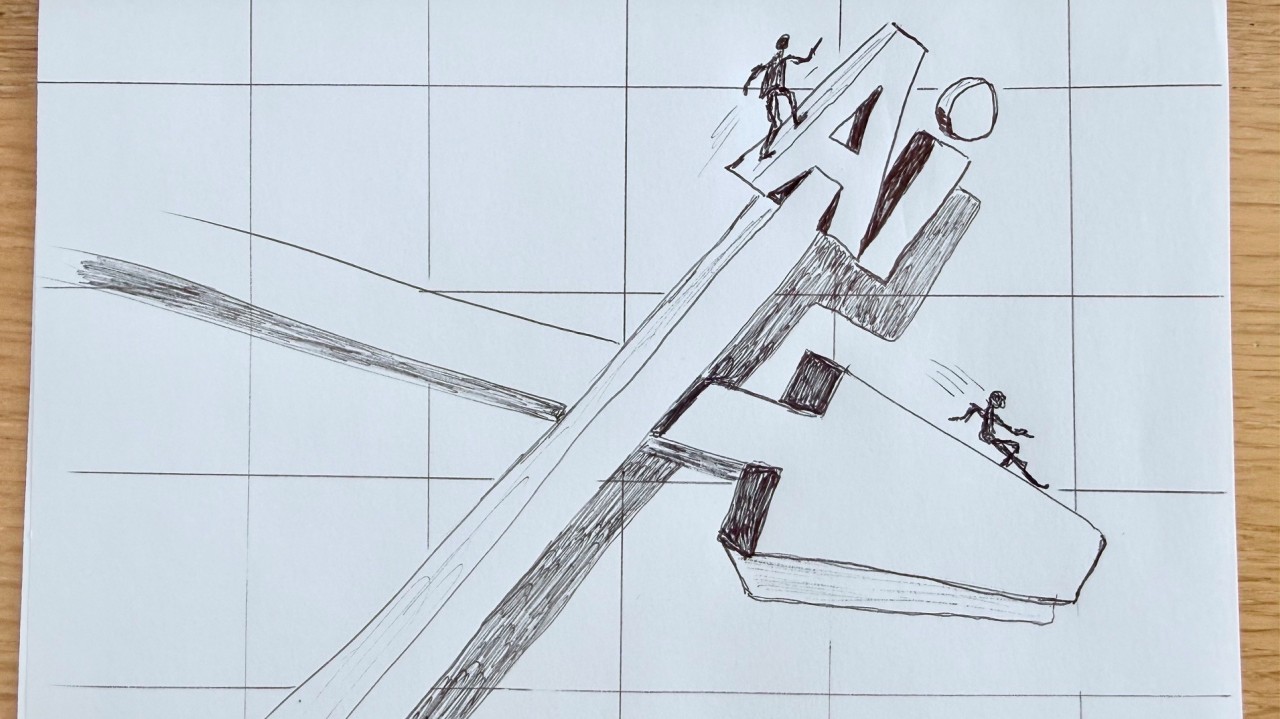
Executive summary. Corporate treasury stands at a genuine inflection point. After decades of incremental improvement (better T(R)MS platforms, faster payments, more sophisticated hedging tools) the profession is now facing a cluster of technological revolutions that are not incremental at all. Artificial intelligence, tokenisation, real-time payment infrastructure, autonomous treasury operations, and quantum-safe cryptography are converging at a pace that will fundamentally reshape what corporate treasurers do, how they do it, and what value they create. Despite a difficult geopolitical and macroeconomic context, the opportunity embedded in these five revolutions is enormous. The treasurers who understand them earliest will define the next generation of the profession.
There is a version of the future of corporate treasury that is essentially the present, done faster and cheaper. Better software, smoother bank connectivity, more automated reconciliation. That future is real, and it is already arriving. But it is not the future that should be occupying the attention of senior treasury professionals today. The future that demands serious thought, and serious preparation, is the one being built by five technological revolutions that are individually powerful and collectively transformative. They are not evenly distributed across time: some are here now, others are three to five years away, and one is a decade out but carries consequences so significant that the preparation must begin immediately. Taken together, they represent the most fundamental reshaping of corporate treasury since the introduction of electronic banking in the 1980s. The question is not whether they will change our world. The question is whether we will be ready when they do.
The five revolutions: what they are and why they matter
1. Artificial Intelligence: from automation to augmentation (now to 2027)
Artificial intelligence is already inside corporate treasury, whether or not the treasury team knows it. Cash forecasting engines embedded in TRMS platforms, fraud detection algorithms in payment gateways, and natural language interfaces in banking portals are all AI-powered. But the transformation now underway goes significantly further. Large language models trained on financial data are beginning to augment the analytical work of treasury analysts: drafting covenant compliance summaries, scanning new facility agreements for non-standard clauses, generating scenario narratives from raw exposure data. The AFP’s 2025 survey found that organisations using AI-assisted cash forecasting achieved accuracy improvements of 30 to 40% over traditional models, a gain that directly reduces precautionary liquidity buffers and therefore the cost of funding.
The more disruptive application is in decision support. The treasurer of 2028 will not be asking a team of analysts to model three scenarios manually and present them in a weekly committee. The AI layer will have already identified the 12 most material scenarios, ranked them by probability and financial impact, flagged the ones that breach policy thresholds, and presented a recommended response with the supporting rationale. The treasurer’s role shifts from calculation to judgment, from doing the analysis to interrogating it, contextualising it, and taking responsibility for the decision. That is a more interesting job, and a more valuable one. But it requires a different skill set, and the window to develop it is open now.
2. Tokenisation: rewriting the architecture of financial settlement (2026 to 2029)
Tokenisation, the representation of financial and real-world assets on distributed ledger infrastructure, is the revolution that most treasury professionals understand least and underestimate most. The BIS’s 2023 report on tokenisation in the context of money and assets identified it as a potential step-change in the efficiency of financial market infrastructure, and the evidence since then has only strengthened that assessment. Tokenised deposits, already operational at HSBC (Orion platform) and J.P. Morgan (JPM Coin), enable atomic delivery-versus-payment settlement: the simultaneous, instantaneous exchange of an asset and its cash consideration, with no intraday credit exposure and no settlement lag. For a corporate treasurer managing daily payment flows of hundreds of millions, the elimination of settlement risk and the ability to deploy liquidity with precision across a 24-hour cycle is not a marginal operational improvement. It is a structural change in how the balance sheet works in real time. Trade receivables tokenisation extends the opportunity further: the conversion of receivables into transferable digital instruments that can be pledged, sold, or used as collateral on programmable platforms, without the administrative friction of traditional factoring or supply chain finance programmes. The treasurer who masters this infrastructure in the next three years will have access to a liquidity management toolkit that their competitors, still working with batch settlement and bilateral SWIFT messaging, will not.
“The five revolutions are not sequential. They are simultaneous. The treasury function that tries to address them one at a time will always be catching up. The one that builds the capability to navigate all five in parallel will define the next decade of the profession.”
— François Masquelier, Chair of EACT
3. Real-time everything: payments, reporting, and the 24/7 treasury (now to 2028)
The migration to real-time payment infrastructure, driven by the ECB’s TIPS system, the expansion of instant payment schemes under PSD3, and ISO 20022’s rich data capabilities, is dismantling the batch-processing architecture that has governed treasury operations for thirty years. When payments settle in seconds rather than hours, and when account statements are replaced by continuous transaction streams in camt.053 format, the entire operating rhythm of cash management changes. Concentration banking, end-of-day sweeping, and intraday credit lines built on settlement lags become, at best, partially redundant and, at worst, actively inefficient. The 24/7 treasury is no longer a speculative idea. It is an engineering challenge. The question is not whether corporate settlement will eventually operate around the clock, it will, but whether treasury’s technology infrastructure, governance frameworks, and staffing models are being redesigned now to operate within it. Organisations that have not yet begun their ISO 20022 migration, that are still running nightly reconciliation batches, or that have not explored API connectivity for real-time balance visibility are already behind the curve.
Revolution readiness: five questions for your treasury
- Is your cash forecasting model AI-assisted, or still Excel-based?
- Has your banking partner demonstrated a tokenised deposit or real-time settlement capability to you in the last 12 months?
- Are you receiving account statements in ISO 20022 / camt.053 format, or still in MT940?
- Does your treasury policy explicitly address autonomous payment execution thresholds?
- Has your IT security team briefed you on post-quantum cryptography migration timelines?
If the answer to three or more of these is no, the five revolutions are arriving faster than your organisation is preparing for them.
4. Autonomous treasury: when the system manages itself (2027 to 2031)
The fourth revolution is the most conceptually challenging, and the most frequently dismissed as science fiction by practitioners who have spent their careers managing exception-based processes. Autonomous treasury, the execution of treasury operations by AI agents operating within policy-defined parameters, without real-time human instruction, is not science fiction. It is a logical extension of the automation that treasury has been building for twenty years, now powered by AI systems capable of exercising contextual judgment rather than merely executing rules. The immediate applications are in intraday liquidity management: AI agents that sweep balances, allocate short-term investments, and adjust FX hedges dynamically as exposures shift, within pre-approved policy corridors, without requiring a human to initiate each transaction. The further horizon is more ambitious: autonomous agents that negotiate intercompany funding terms, file regulatory reports, and maintain covenant compliance monitoring in real time. The governance question this raises, who is responsible when an autonomous system makes a decision that causes a loss, is not a reason to avoid the technology. It is an argument for designing the governance framework before the technology arrives, rather than after.
5. Quantum-safe cryptography: protecting tomorrow’s treasury today (2028 to 2035)
The fifth revolution is the one most treasury professionals have not yet put on their agenda, and the one that carries the most severe consequences if preparation is left too late. Quantum computing, when it reaches sufficient scale, will be capable of breaking the RSA and elliptic-curve cryptographic algorithms that currently protect payment authorisation, digital signatures, and bank connectivity infrastructure. NIST published its first post-quantum cryptographic standards in 2024. The timeline for cryptographically relevant quantum computers is debated (estimates range from 2030 to 2040) but the migration of banking and payment infrastructure to quantum-safe algorithms will take years, and the organisations that begin the assessment process now will be materially better positioned when the migration window opens. For corporate treasury specifically, the exposure is concentrated in payment authentication, SWIFT messaging security, and the cryptographic integrity of digital asset holdings. Treasurers who have not yet had a briefing from their IT security team on post-quantum migration timelines should request one. The question is not whether this revolution will affect treasury. It will. The question is whether it will be a managed transition or a crisis response.
Beyond the hype, the next big bang is already detonating
When we ask what will genuinely transform corporate treasury tomorrow, the answer is not a single technology but a convergence of five simultaneous revolutions, arriving at different speeds but demanding attention today. What matters is not the hype, it is the technologies that will genuinely transform our world, and the discipline to distinguish the durable from the ephemeral. AI, tokenisation, real-time infrastructure, autonomous operations, and quantum-safe cryptography are all durable. They are not vendor promises or conference keynote enthusiasm. They are engineering realities whose trajectories are already visible.
And to invoke the third framing: the next big bang in treasury is not a future event to be anticipated. It is already detonating, quietly, unevenly, in the forward-thinking treasury functions of large European multinationals that have decided not to wait for perfect clarity before moving. The question that every Group Treasurer should be asking their team this week is simple: which of these five revolutions is already on our roadmap, and which ones are we still treating as someone else’s problem? The answer to that question will, over the next five years, determine the difference between a treasury function that leads and one that follows.
The context is tough. The geopolitical environment is unstable, regulatory demands are intensifying, and the bandwidth of treasury teams is already stretched. But context has never been the reason to delay building capability. It has always been the reason to accelerate it. Tomorrow’s treasury will be shaped by the decisions made today. The revolutions are under way. The only remaining question is whether you are in them.
References & sources
- AFP / Kyriba — 2025 State of Treasury Technology: AI, Automation and the Path to Real-Time (2025)
- BIS / CPMI — Tokenisation in the Context of Money and Other Assets: Concepts and Implications (2023)
- European Central Bank — Progress Report on the Digital Euro: Wholesale Settlement Experiments (2025)
- McKinsey Global Institute — The State of AI in Finance: From Experimentation to Production (2026)
- EACT / Simply Treasury — TreasuryMap.com: Treasury Technology Selection Framework, 15 Categories (2026)
- Gartner — Hype Cycle for Financial Management Technologies (2025)
- SWIFT — ISO 20022 Migration Progress Report: Corporate Treasury Adoption (2025)
- World Economic Forum — The Future of Jobs Report: Finance Roles in the Age of Automation (2025)
François Masquelier — CEO of Simply Treasury · Chairman of ATEL · Chair of EACT